About the workshop image
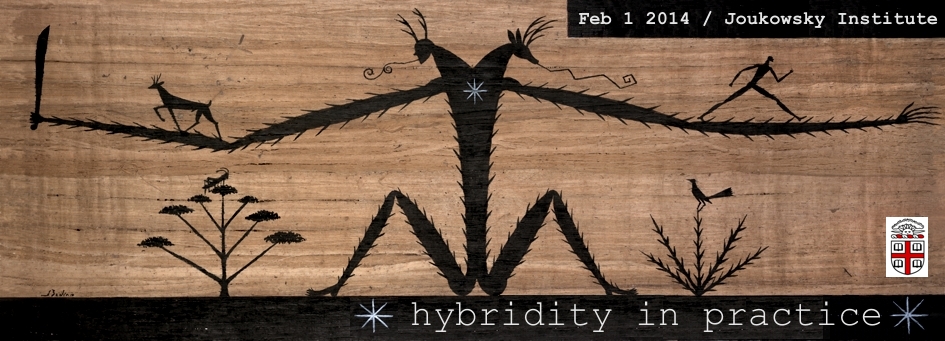
José Bedia. Between two worlds
Like the great artists, José Bedia (Havana, 1959), constructs mirrors in which we can see ourselves from many different points of view so we can learn about ourselves. (...) Bedia bases his work on a critical and anthropological treatment of peoples and cultures, the majority with ancestral origins. Many of his works are based on Afro-Cuban traditions still alive in his country, but he also studies and works with cultures of Amerindian origin such as the Sioux, Yaqui, Cherokee or those from Latin America, Australia or Oceania. (...) Due to his desire to 'be there', to be 'with them', Bedia has reached a highly intense level of personal involvement. For example, in 1983 he, himself, became initiated in the Congo cult of Afro-Cuban practices. In his own words, his idea is to "establish a bond with these communities" and that "only after this does my work begin". That is the work of Bedia 'emerges' once he has penetrated in the 'others' and the 'others' have entered him. We know that in his case the 'miracle' happens, in that he ends up giving us another life, beyond our occidental sense of seeing and perception. (...) The artist and essayist Luis Cammitzer, in his magnificent book The New Art of Cuba (University of Texas Press: Austin, 2003, p. 46) affirms: "Bedia has succeeded in codifying his drawings in a rigid pictographic system, a quasi-alphabet". And it really is this, an artistic formula which could be described as 'magic'. A kind of creative hand which sums up ideas in long schematic black lines, for example, full of significances and references.
Isabel Durán, from the Exhibit catalogue, José Bedia. Entre dos mundos (Institut Valencià d'Art Modern, September 9 - November 21, 2010), Valencia, 2010, p. 114.
Image and text from the catalogue reproduced here with the kind permission of José Bedia and Isabel Durán.
More on José Bedia
|