The Ancient Maya Landscape was a multi-faceted phenomenon that was perceived from numerous viewpoints and held different meaning for different classes of Maya society. The landscape may be considered as a whole or it can be broken down into various types of landscape. Below we present the different landscapes that are being considered by The Landscape Succession Project.
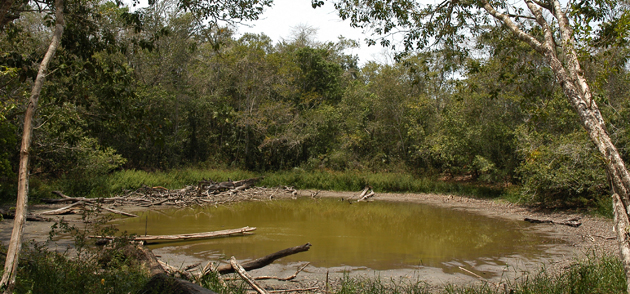
The Natural Landscape is dominated by the humid subtropical forest that covers most of the Maya lowlands. This seemingly endless jungle is in fact extremely heterogeneous with numerous microenvironments. The well-drained uplands are referred to locally as the montaña, and this is where almost all archaeological sites are located. There are large stretches of bajos, or seasonal swamps that come in both scrub and palm varieties. The harsh scrub bajos were exploited by the Maya for resources ranging from nutrient rich mud to small, edible snails. The palm bajos were used for agriculture, with ruined terraces and berms frequently being found here, sometimes on the margins of the scrub bajos. Though less common than bajos, civales are perennial wetlands that would have been a source of diverse resources, unavailable elsewhere in the lowlands. The Maya, especially during the Classic Period, constantly modified the natural landscape to maximize its productivity, while at the same time taking measures to conserve the environment so that it would be sustainable for future generations. The aguada shown above is one example of how the Maya modified the natural landscape. Aguadas are clay-lined depressions capable of holding water through the dry season. The Maya regularly dredged and refinished aguadas so that there would be a constant source of fresh water.
The natural landscape also supplied the Maya with important materials. Chert deposits were exploited for stone tool manufacture. Building materials were extracted directly from the limestone bedrock forming large quarries that were sometimes converted into reservoirs or aguadas. Clay sources were used to manufacture the ceramics, both domestic and ritual, that were essential to the day to day functioning of Maya civilization. The rich flora and fauna communities were exploited not only for food, but also for costume and decoration materials such as feathers and furs. Surpluses obtained locally were used to barter and trade for raw materials and manufactured goods not available locally. Volcanic obsidian and granite ground stone tools are some of the most common examples of imported goods in the lowlands.
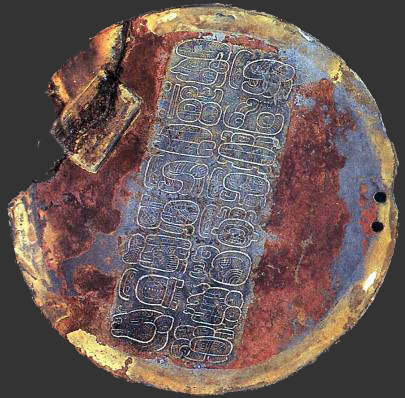
The Political Landscape of the Maya operated at the level of the numerous royal courts that controlled different areas of the lowlands. Almost all of what we know about ancient politics comes from the decipherment (click here to link to Dave Stuart's decipherment blog) of Maya hieroglyphic writing. Maya texts recount a history of wars and alliances, rituals and sacrifices, and detailed geneaological data that legitimized the rule of kings and queens. Political considerations effected settlement strategies and dictated boundaries between territories. Alliances were formed through marriages, tribute, and shared rituals. Wars were fought to assert dominance, control resources, and obtain captives. The mirror back shown above was found in Costa Rica, but describes actions by rulers from El Zotz and El Peru demonstrating the broad reach of Maya politics. Most of our data comes from the Classic Period, but an increasing body of evidence suggests that the Maya political landscape developed its complexity during the Late Preclassic.
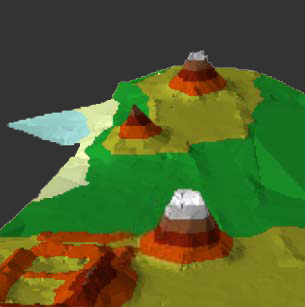
The Urban Landscape is unique to each Maya site. Local dynasties chose different architectural configurations and monument dedication programs to express their power and glory. The urban landscape was designed and presided over by members of the royal court, led by the k'uhul ajaw. Some of the most common features of the Maya urban landscape are:
- Temple pyramids
- Ceremonial plazas
- Ball courts
- Palace or acropolis
- Stelae and altars
Maya architecture was built from limestone and covered in lime plaster. The exterior of structures were often painted, with red being the preferred color. In addition to its civic, religious, and residential function the urban landscape was also part of local subsistence. Studies have shown that the vast plastered surfaces at Maya sites were designed to capture rain water and channel the runoff into reservoirs and aguadas for future consumption.
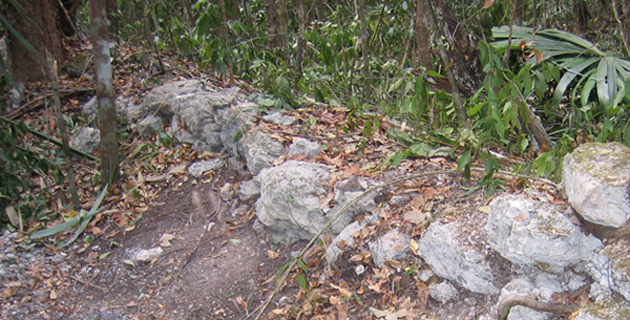
The Rural Landscape was home to the majority of the ancient Maya population. In rural areas farmers carved their existence out of the ever-encroaching forest. Extended family groups settled small portions of land to farm and produce household materials. Ruins of house compounds, agricultural terracing, and local stone quarrying are scattered throughout the jungle of the southern lowlands. Most of these remains date to the Late Classic period when populations were at their greatest. Rural areas also represented the boundaries between competing Maya polities. In regions with heavy conflict rural areas may have defensive walls that would have supported perishable fortifications. The wall depicted above may represent one of these features.
Page author: Thomas G. Garrison
