Posted at Mar 17/2010 07:28PM:
Kaley Curtis: In her chapter, Bahrani describes the colonial and imperial approach to Mesopotamia as one that sought to impose certain forms of dominance in terms of space and time. More specifically, she says that "a particular Mesopotamian identity was required for the narrative of progress of civilisation as an organic universal event." This progress of civilization was the progress of Western civilization and Mesopotamia was seen as a necessary part of this Western identity. Discuss the implications of this colonial agenda and what Bahrani meant by dominance of space and time. Does this apply to any other countries we have studied?
Posted at Mar 17/2010 10:06PM:
ariel: Unlike the other countries we have looked at, early Iraqi nationalist embraced a pan-arab past in constructing their national identity. How does this re-appropriation of a more recent past mesh with the notion of Mesapotmia s the "cradle of civilization?" Can the two identities co-exist, or are the inherrently at odds? Can a nation have more than one heritage story?
Posted at Mar 17/2010 10:55PM:
Valerie: The readings this week point out different "types of histories" that have been imposed in one way or another on Iraq. Can the Iraqi people ever develop one history that is continuous, taking into account both their pre-Islamic and Islamic pasts without the same political bias? Or are politics and archaeology inextricably linked in Iraq because it is such a new nation full of such diverse people? How is this situation rendered even more complex by the fact that the West, as Bahrani writes, had to completely disassociate ancient Mesopotamia from the peoples living in the same geographic region today in order to make it a part of the universal human (Western?) narrative whilst, as Bernharddson writes, the Iraqis have used the same Mesopotamian history to solidify themselves as a coherent nation separate from others? I would also be interested in discussing the issue of "naming" that Bahrani addresses and the similarities and differences between Iraq and Israel/Palestine on this topic.
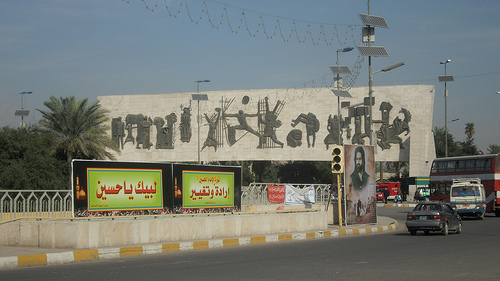
I'm also including a link to artwork by Jawad Salim, a famous Iraqi artist mentioned in the readings who had an important role in the creation of an "Iraqi identity", if anyone is interested. It is a sculpture in Tahir Square in Baghdad entitled "Nasb al-Hurriyah" (Monument of Freedom).
https://www.photius.com/images/iq04_03a.jpg
#Megan: Bernhardsson claims that the stricter regulation of antiquities in Iraq under al-Husri was a means of asserting national control under the auspices of the Mandate system. He states that archaeology and antiquities were a ground Iraqis could contest, while other resources like oil and military independence were not (Bernhardsson, 198). What is it about antiquities that makes them a forum for the assertion of national or local agency? What factors undermine Bernhardsson's claims (thinking particularly of Goode's later history of Western excavations in Iraq)? How does the debate surrounding antiquities legislation in Iraq reflect perceptions of historical and material ownership in both Europe and the Middle East?