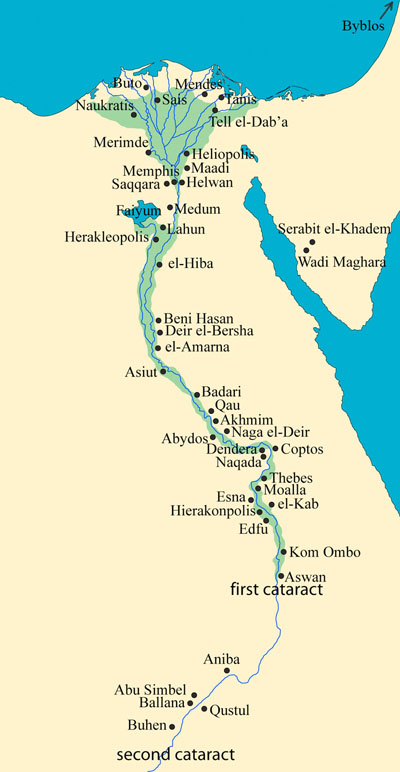
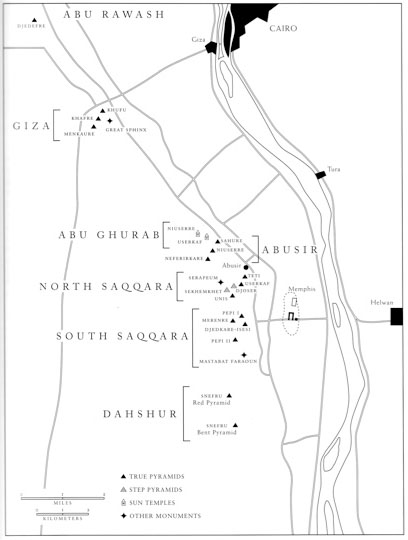
This page is a place for anyone to post questions prior to next week's exam. I will periodically log in and answer questions. You can also e-mail me, of course, but if you have a question chances are others do, too, so having a public forum seemed kind. But first - the following list of places are those you must be able to locate on a map for the first exam. I will give only a selection of these on the exam itself. The intent is that as you learn their locations, the reasons they mattered and the interactions between them will make more sense.
Memphis
Giza
Hierakonpolis
Abydos
Aswan
Buto
Meidum
Coptos (same thing as Koptos)
Saqqara
Heliopolis
Maadi
Badari
Naqada
Helwan
Abu Ghurob
Upper Egypt
Lower Egypt
Meanwhile, a big round of applause to Billy for suggesting I post a couple of maps that make for easy studying of the site locations. (The point of learning these is not to make your lives difficult; it's to contextualize information.) Here they are!
Another note: there are things in the reading that we didn't discuss at all in class, such as interactions with the Levant in the 1st Dynasty. Make sure you've done the readings.
Posted at Oct 04/2011 06:54PM:
Prof. B: A question about dates. You don't need to know dates to the year at all. You don't even need to know them to the decade. In fact, if you can give me the right Dynasty (or, in the Predynastic, cultural designation) you are golden.
Posted at Oct 05/2011 12:18AM:
walkermills: I'm wondering about the names. Are we responsible for every king, or just the important ones? Should we be able to just match them to a dynasty or have them all in exact chronology?
Posted at Oct 05/2011 12:45AM:
eduthinh: what will be the format of the exam?
Posted at Oct 05/2011 08:11AM:
Prof. B: Good questions. The format will be: 10 map IDs (just write them on a given map). Five short answers from a list of 8. These are terms (king's name, elite person's name, place, title, god, etc) that you are asked to define and give the historical significance of, including changes over time (in the case of a place or title, say) and/or problems of interpretation. The final section is an essay where you have a choice of documents; you need to compare and contrast two of them. None of the things on the exam are super obscure because at every stage of the exam (except the map) I am as interested in seeing your ability to THINK as to memorize. I want you to demonstrate that you understand the arc of history we've covered so far but also that you can make connections and recognize appropriate ways to treat often difficult or scanty evidence. What this means for kings, say, is that you don't need the short-lived obscure ones. If you couldn't write a paragraph on a king and his importance based on lectures and readings, I'm not going to ask him. You definitely need to know Dynasty, and in some cases the place of a king in a Dynasty is really important to understanding why he matters (think Djoser, or Unas, or Pepi II), but not always. Don't memorize lists of kings, memorize which kings were important and why. Likewise for private people, I'm only going to ask ones we specifically mentioned in class or who have texts that we read for discussion today. Even then, the longer biographies give us more meat to chew on, so those guys are far more likely than the short ones.
Posted at Oct 05/2011 06:56PM:
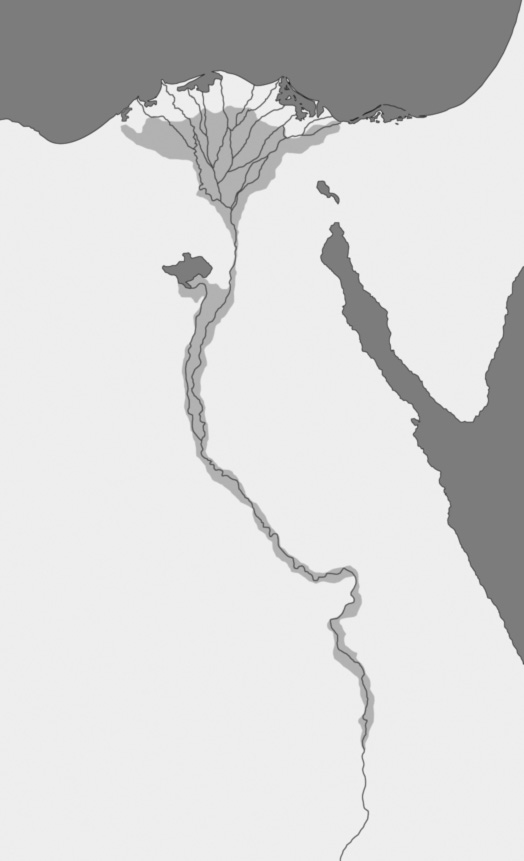
liz: could you post a blank map, preferably the one you will use on the midterm? it would help to know if there will be pre-located dots for sites, or what geographical landmarks we will have, what scale.
Posted at Oct 06/2011 07:22PM:
Prof. B: Hmm, let me find it.... It is the colorful map above but with all the sites taken off. There are not any dots for sites. Hang on...
Posted at Oct 06/2011 11:02PM:
Jackson: Found this to be helpful, even just for the "Further Reading" section at the end of the description of each site: https://ancientegyptonline.org/EgyptMapApplication/
